Compliance Data.
Connected.

120Water is the data management platform that brings state agencies and utilities together for water quality and asset compliance.

Trusted by those who protect water

Streamline the way you manage compliance

When your data, tasks, and reporting live in one system, compliance feels manageable. Built to perform at scale, 120Water keeps utilities and states aligned as programs grow and requirements change.

7000
+
Users
48
States
served
1
Centralized platform
17
M+
Service lines inventoried
320
K+
Sample
kits sent
2
M+
Communications sent

UNCHARTED WATERS

New data, technology, and regulations hit the industry every day, creating uncharted waters that utilities and regulators must navigate to manage compliance.

Compliance complexity

New rules don’t just add oversight. They add responsibility. Teams are expected to interpret changing requirements, adjust processes, and get it right the first time, often without additional staff.

Disconnected data

Utilities track assets and water quality across multiple tools. Agencies struggle to get unstructured data into the right format. Data integrity and compliance approval suffer as a result.

Constrained resources

There’s always more work than people to do it, and it’s harder when experienced staff leave, and budgets stay tight. Compliance competes with main breaks, inspections, and daily operations, and someone still has to make sure it gets done.

Public scrutiny

When water quality makes headlines, your team is the one answering questions. Communities are paying attention to their water quality more than ever. They expect transparency, accuracy, and timely communication.

120Water makes it easy to:

Utility metrics for the last 7 days showing 7 programs, 53 samples, 2 exceedances, and 565 locations.

Connect your data

Unify every part of your water management program – from asset data to sampling tasks – so you always know what's happening.

User interface showing a button to complete customer notice certification and an inventory submission deadline of 23 days marked as not submitted.

Drive compliance

Whether it’s LCRI or the next emerging contaminant, our software and services keep your compliance in check.

Table titled Monitoring Requirements showing two entries for requirement COLI_DS001 analyzing Coliform at a Treatment plant with statuses Scheduled and To Do and results of 500mg each.

Create capacity

Save time and labor throughout the compliance process, so you and your team can focus on the most vital daily operations.

Hear From OUr Customers

The "easy button" for compliance
"The Town of Bluefield is extremely satisfied with our partnership with 120Water... For our limited staff, 120Water has truly been the 'easy button,' helping us stay aligned with EPA and Commonwealth of Virginia regulations."
Man in a beige shirt and dark patterned tie sitting at a desk with hands clasped, with shelves and office supplies in the background.
Andrew S. Hanson
Town Manager, Bluefield, VA
Helping states manage compliance
"We've been focused on what we need to do for LCRI to stay on track. Having a tool like 120Water keeps us from falling behind and helps our team track requirements, manage the work, and support the state."
Stephen Mann
Administrator, Delaware Health & Social Services, ODW
"The 120Water Platform has been a great experience."
"Having our methodology, certificates, and maps all in one place has been invaluable, and linking our website directly to the 120Water map helps our customers. It's really helped us streamline our partnership with the state."
Dan Quintanar
Dan Quintanar
Project Manager, Tucson Water
A "mountain" of data transformed
"Del-Co had a mountainous amount of unstructured data content identifying service line material. 120Water took that content and extracted the required data into a structured format we could use to comply with the EPA mandate."
Smiling woman with long brown hair and a light background.
Kris Dye
Chief Business Officer, Delaware County, OH
"We are always a step ahead."
"We’re not just meeting compliance. We’re building trust with our community, and 120Water has made that possible. I’m not waiting for another compliance deadline to sneak up on us. With 120Water, we’re always a step ahead."
Bearded man wearing glasses and a white baseball cap smiling in front of informational posters on a wall.
Brian Warren
Regulatory Specialist, City of Pendleton, OR

One platform. Everyone connected.

Utilities

Manage asset compliance, track water quality, and meet regulatory deadlines – all in a simple-to-use solution.

State Agencies

Maximize oversight, standardize reporting, and harness the power of real-time data to allocate dollars and manage compliance.

Insights, tips, and resources for water professionals

webinar

LCRI in Practice: The Deadlines, the Cadence, and What Applies to You

Discover the tools and real-world insight you need to tackle LCRI compliance with confidence.

August 26, 2026

Heading 1

Heading 2

Heading 3

Heading 4

Heading 5
Heading 6

Lorem ipsum dolor sit amet, consectetur adipiscing elit, sed do eiusmod tempor incididunt ut labore et dolore magna aliqua. Ut enim ad minim veniam, quis nostrud exercitation ullamco laboris nisi ut aliquip ex ea commodo consequat. Duis aute irure dolor in reprehenderit in voluptate velit esse cillum dolore eu fugiat nulla pariatur.

Block quote

Ordered list

  1. Item 1
  2. Item 2
  3. Item 3

Unordered list

  • Item A
  • Item B
  • Item C

Text link

Bold text

Emphasis

Superscript

Subscript

podcast

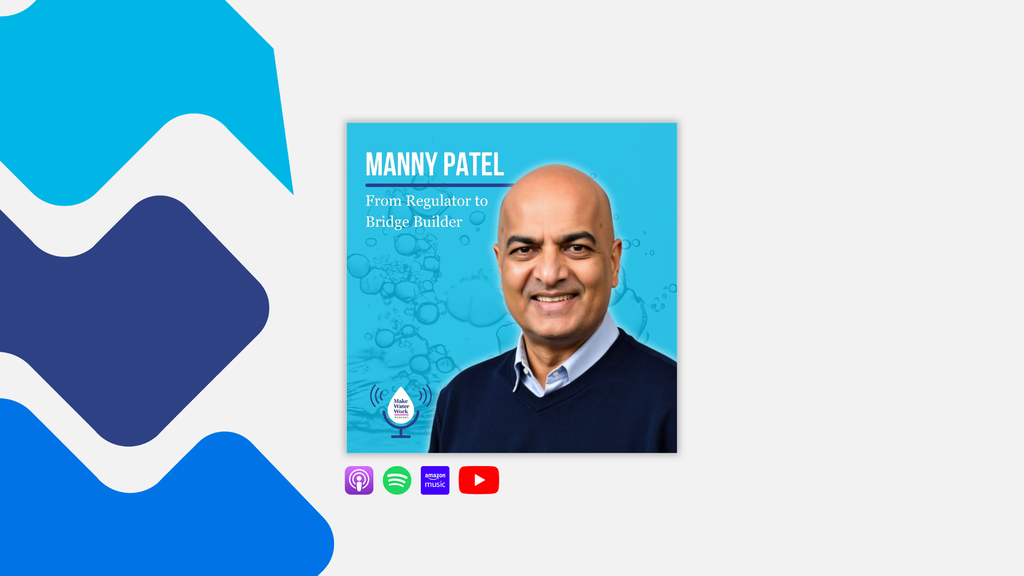
Make Water Work Podcast Featuring Manny Patel

Former Georgia EPD drinking water manager Manny Patel explains how state programs work, why flat budgets demand new tools, and what he’d modernize next.

October 8, 2026

Episode 51: Manny Patel - From Regulator to Bridge Builder

When Manny Patel's boss called to move him from the air program to drinking water, his answer was honest: "I don't know anything about water except that it comes from a tap and I drink it." A decade later, he calls those years the most fun of his nearly 40-year career.

In this episode of Make Water Work, Isaac Pellerin sits down with Manny Patel, Senior Director of Water Administration at 120Water and former Drinking Water Program Manager at Georgia EPD. Manny walks through what a state drinking water program actually does, why five new rules landing on flat budgets forced states to rethink their tools, and what he'd modernize next if he had the time and money.

In this episode:

  • How a chemical engineer from petroleum refining and air permitting ended up running a state drinking water program
  • The four core buckets of a state program: compliance, sanitary surveys, engineering review, and source water protection
  • Monthly operating reports, CCRs, and the case for a single state dashboard
  • Using data to prioritize SRF dollars before a crisis instead of after one
  • Asset management: why pipe age isn't the only indicator of failure
  • Why a 20-year regulator chose to join a solution provider
No items found.
No items found.
customer stories

How Evanston, Illinois Got Ahead of the Lead Pipe Deadline

How Evanston tackled lead service line inventory, school testing, and replacement planning ahead of the LCRI’s 2027 deadline.

October 15, 2026

When Illinois first asked the City of Evanston to inventory its lead service lines, the state's form was pretty basic: how much lead, how much non-lead galvanized. Today, that same annual submission is "a serious comprehensive spreadsheet," says Darrel A. King, Evanston's Water Production Bureau Chief. Filed as a PDF every April, it runs 203 pages.

That jump from a simple form to a 203-page filing previews what many U.S. water systems are about to go through. The federal Lead and Copper Rule Improvements (LCRI) set a compliance deadline of November 1, 2027. Illinois moved earlier, with a 2022 state law, the Lead Service Line Replacement and Notification Act, and the state's 2024 adoption of the Lead and Copper Rule Revisions (LCRR). Evanston has been working through many of the LCRI's requirements ever since.

‍

The Inventory Got Bigger, and So Did the Questions

Evanston's current inventory covers more than 14,000 service lines: roughly 5,400 confirmed non-lead, just over 9,200 lead, and 270 galvanized lines that require replacement. Since the 2022 law took effect, the city has replaced just over 1,300 lead service lines.

To verify what is actually coming into each building, Evanston is using a citywide water meter and meter-interface-unit (MIU) replacement program, now in its first or second year and covering more than 13,000 homes. When installers run new wiring inside a property, the city gets a chance to see the service line material for itself.

The first year Evanston mailed its service line material notices, the notice was comprehensive and required no action, and the city still got hammered with resident requests. Staff spent about a month keeping up. Now the city runs pre-outreach education before each notice goes out, telling residents what the letter is and that it needs nothing from them. The flood hasn't repeated.

‍

Then Came School and Childcare Testing

In 2025, Evanston launched a lead testing and notification program for schools and childcare facilities. "There's just a lot of extra work, a lot of areas that we were not used to being in," said Eleanore Meade, the city's chemist, who is responsible for water quality and compliance.

Step one was building a list. School boards, state licensing boards, and the public health department each had a version, and the versions didn't match. Some sites had closed. Others showed up on one list and not another. The state also gave little guidance on how to carry out the program in year one, so Evanston worked on a tight timeline.

The first-year requirement was to sample 20% of the inventory. Facilities that declined, didn't want sampling, or already had results could still count toward that total, and so could facilities that never responded, as long as the city documented its outreach. Evanston is now working through the sites it didn't reach the first time, aiming to finish them in a single year.

‍

A Replacement Plan Built Around Several Numbers

Evanston isn't sure yet how many lead lines it will have to replace each year. Under the Illinois act, it expects about 500 a year. Under the LCRI, that could rise to about 1,000 a year, or around 642 a year if a deferral stretches the timeline to 16 or 17 years. The city's plan lays out how to reach each of those numbers, and the city has elected to cover the cost of replacements all the way into the house.

Evanston runs three replacement programs today. The annual water main replacement program doubled this year, from 1.5 miles to 3.2 miles. A leaks-and-breaks program covers replacement on both the public and private side when a lead or galvanized line fails. A homeowner-initiated pilot, open at up to 50 locations this year, offers a $2,500 reimbursement and waives permit fees for residents who don't want to wait for the city's schedule.

Funding comes from ARPA dollars, cash, water rates, state revolving fund loans, about $5.4 million in principal forgiveness tied to state-designated disadvantaged census tracts, a Department of Commerce and Economic Opportunity grant for low- and moderate-income areas, and TIF dollars where available. Outreach runs through mailings, community and ward meetings, FAQs, door-to-door visits, and yard signs. The city is also working with a consultant who specializes in messaging, because some households need ten contact attempts before they respond.

‍

Sampling Rules Changed Too

In May 2024, Illinois asked Evanston for a new lead and copper sampling site plan. The old version needed little more than an address. The new one asked for the public-side and private-side materials, the year the home was built, and what was on the private plumbing.

"That's a whole paradigm shift for utilities. We weren't used to paying attention to anything past our own infrastructure, and now we're expected to know a lot more about it." — Eleanore Meade, City of Evanston

A new tiering system followed. Evanston went from 30 sampling sites to 60 and from once-a-year sampling to twice a year, which Meade pointed out meant 120 samples in a year.

Meade had been running the newer "first-and-fifth-liter" protocol since 2022, because it was on her radar and she wanted to see the results before anyone was surprised. Evanston uses a blended polyphosphate for corrosion control, and its fifth-liter samples tend to run higher than its first-liter samples, roughly a 3 parts-per-billion increase at the 90th percentile. The city's 90th percentile still came in under the 10 ppb action level, which moved Evanston back to standard monitoring: 60 sites, once a year.

‍

Where 120Water Fits In

Most of what's above is Evanston's own program, built to meet Illinois law. One piece runs through a direct partnership with 120Water: sampling after a replacement. Once a replacement is done, the address goes into 120Water's database. About a month later, 120Water sends the customer an offer to have their water sampled. Customers who opt in get a kit roughly three months after the replacement, and results go to both the customer and the city. Per 120Water's review of the data, about 35% of customers who receive the offer take it.

‍

The Advice They'd Give Everyone Else

Asked what they'd tell other systems, Meade said to start early and not to be shy about borrowing templates, FAQs, and sampling instructions from utilities that have already built them. King did the same with his public-facing inventory map. After attending a seminar where large cities described their lead work, he used Cincinnati's map as a template for Evanston's. He also urged utilities to ask regulators their questions and to lean on their AWWA state section, which Evanston does with the Illinois section.

"Don't feel like you're alone, and that you have to create it all by yourself. There are other utilities out there that have already been through this." — Darrel A. King, City of Evanston

Evanston has been working under Illinois' lead service line rules since 2022, so its team can already say what the work looks like: a bigger inventory, new lists to build, more sampling sites, and a replacement plan that has to hold up under several possible numbers. Their advice to the systems next in line is to borrow what already exists and ask for help early.

No items found.
White water drop icon on a dark blue background.

Let’s make water work for everyone...

Aerial view of a large circular water treatment plant with multiple green water tanks and connecting walkways.Animation illustrating the steps of an industrial water treatment process, including screening, chemical addition, flocculation, sedimentation, filtration, and disinfection.